| Vorheriges Thema anzeigen :: Nächstes Thema anzeigen |
| Autor |
Nachricht |
Gigas 


Anmeldungsdatum: 05.10.2019
Beiträge: 87
Wohnort: Sweden
|
 Verfasst am: Fr Dez 05, 2025 7:25 pm Titel: Two lenses front to front for macro |
|
Verfasst am: Fr Dez 05, 2025 7:25 pm Titel: Two lenses front to front for macro |
|
|
Gigas wrote:
If you use two identical lenses, in my case a Colorplan P2 closest to the camera as a "tube lens" and then a similar one, in my case a Supere-Colorplan P2.
Mount them front to front and you get a macro lens that magnifies a lot.
The disadvantage is finding the good solution for the mounting and that the space for lighting becomes about 3”only.
Here is a picture I took this afternoon.
https://www.flickr.com/photos/125705582@N07/54966047995/in/dateposted-public/
_________________
Gigas |
|
| Nach oben |
|
 |
simple.joy


Anmeldungsdatum: 30.05.2022
Beiträge: 954
|
Verfasst am: Fr Dez 05, 2025 10:01 pm Titel: Re: Two lenses front to front for macro |
|
Verfasst am: Fr Dez 05, 2025 10:01 pm Titel: Re: Two lenses front to front for macro |
|
|
simple.joy wrote:
| Gigas hat folgendes geschrieben:: |
If you use two identical lenses, in my case a Colorplan P2 closest to the camera as a "tube lens" and then a similar one, in my case a Supere-Colorplan P2.
Mount them front to front and you get a macro lens that magnifies a lot.
The disadvantage is finding the good solution for the mounting and that the space for lighting becomes about 3”only.
Here is a picture I took this afternoon.
https://www.flickr.com/photos/125705582@N07/54966047995/in/dateposted-public/ |
I've seen this technique used before... and I feel like it might work great. But why use projection lenses for that? Wouldn't it be more effective to use two (some good ones are fairly cheap) 50 mm f/2.8 enlarging lenses this way? I seem to recall Robert OToole (former closeuphotography owner, who sadly passed away last year) mentioning that it can improve correction of optical flaws significantly with certain lenses/setups. It's always at the cost of light, but if you're using a studio setup or are dealing with lenses which can be used wide-open it's certainly an interesting option in addition to regular tube-lens + shorter FL lens stacking.
_________________
---
Manual lens enthusiast
https://www.flickr.com/photos/simple_joy/ |
|
| Nach oben |
|
|
Gigas
Anmeldungsdatum: 05.10.2019
Beiträge: 87
Wohnort: Sweden
|
Verfasst am: Sa Dez 06, 2025 11:08 am Titel: Re: Two lenses front to front for macro |
|
Verfasst am: Sa Dez 06, 2025 11:08 am Titel: Re: Two lenses front to front for macro |
|
|
Gigas wrote:
| simple.joy hat folgendes geschrieben:: |
| Gigas hat folgendes geschrieben:: |
If you use two identical lenses, in my case a Colorplan P2 closest to the camera as a "tube lens" and then a similar one, in my case a Supere-Colorplan P2.
Mount them front to front and you get a macro lens that magnifies a lot.
The disadvantage is finding the good solution for the mounting and that the space for lighting becomes about 3”only.
Here is a picture I took this afternoon.
https://www.flickr.com/photos/125705582@N07/54966047995/in/dateposted-public/ |
I've seen this technique used before... and I feel like it might work great. But why use projection lenses for that? Wouldn't it be more effective to use two (some good ones are fairly cheap) 50 mm f/2.8 enlarging lenses this way? I seem to recall Robert OToole (former closeuphotography owner, who sadly passed away last year) mentioning that it can improve correction of optical flaws significantly with certain lenses/setups. It's always at the cost of light, but if you're using a studio setup or are dealing with lenses which can be used wide-open it's certainly an interesting option in addition to regular tube-lens + shorter FL lens stacking. |
The test of two identical lenses “head to head” was based on pure curiosity. When I tried this in macro photography, I was curious about this, if projector lenses could be useful.
My sharpest and best macro images are based on a “tube lens” and a Canon enlarger lens in front of this.
“You can be disappointed over the result when you try something new, but remain hopelessly lost if you don’t try”
https://www.flickr.com/photos/125705582@N07/52637478238/in/dateposted-public/
https://www.flickr.com/photos/125705582@N07/52408671174/in/dateposted-public/
https://www.flickr.com/photos/125705582@N07/52053063940/in/dateposted-public/
https://www.flickr.com/photos/125705582@N07/51986223474/in/dateposted-public/
https://www.flickr.com/photos/125705582@N07/52014662762/in/dateposted-public/
_________________
Gigas |
|
| Nach oben |
|
|
kathala

Anmeldungsdatum: 13.05.2022
Beiträge: 164
|
Verfasst am: Sa Dez 06, 2025 1:40 pm Titel: |
|
Verfasst am: Sa Dez 06, 2025 1:40 pm Titel: |
|
|
kathala wrote:
This also works if you only use one lens, front-to-camera. The shorter the focal length, the more macro you get.
My favourite is a Canon FD 28/2.8
_________________
Photography Reference Tables:
drive.google.com/drive/folders/1aJ5F8XM6t5AK4bydthcDoiwhsh5CUx3N
My Art and Books: ChristianSchnalzger.de
My Exploration of Panoramic Photographic Storytelling:
flickr.com/photos/hach_und_ueberhaupt/
The better you look, the more you see (B. E. Ellis) |
|
| Nach oben |
|
|
DConvert

Anmeldungsdatum: 12.06.2010
Beiträge: 984
Wohnort: Essex UK
|
Verfasst am: Sa Dez 06, 2025 2:25 pm Titel: |
|
Verfasst am: Sa Dez 06, 2025 2:25 pm Titel: |
|
|
DConvert wrote:
I've used coupled lenses quite often for macro, though never with identical lenses.
Some combinations give severe vignetting, but many work fine.
As regards to connecting the lens there are coupling rings sold that work perfectly (Basically like a stepping ring but with two male threads).
With both lenses set to infinity focus the magnification works out to be the ratio of the lenses focal lengths (the one on the camera divided by the reversed one) Working distance is about the flange distance of the reversed lens.
Altering the focus of the lens on the camera increases magnification further. If the reversed lens is block focusing (most of mine are) then its focus control has no effect on the magnification (it just moves the mount out to reduce available working distance)
Here's one using a 50mm reversed on a telephoto (about 4x life size on the sensor)
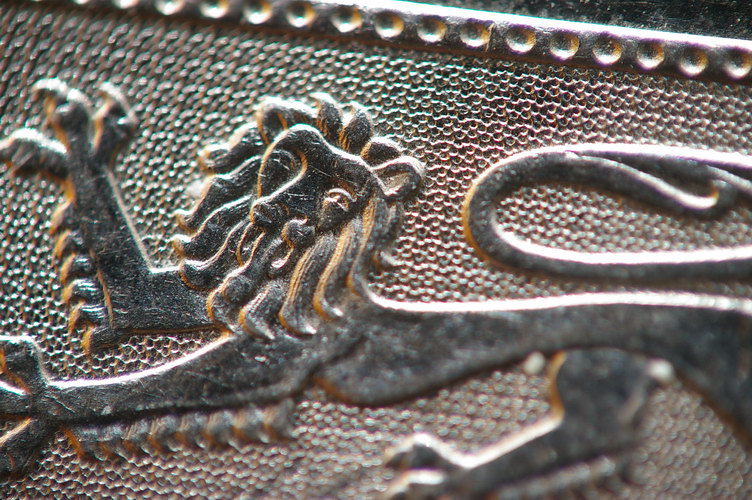 10p macro by Mike Kanssen, on Flickr
One using a telescope eyepeice with the kit zoom
 Knot macro by Mike Kanssen, on Flickr |
|
| Nach oben |
|
|
xkaes
Anmeldungsdatum: 28.10.2019
Beiträge: 177
Wohnort: Colorado
|
Verfasst am: Sa Dez 06, 2025 4:46 pm Titel: |
|
Verfasst am: Sa Dez 06, 2025 4:46 pm Titel: |
|
|
xkaes wrote:
Lefkowitz covers this approach in his book, "The Manual of Close-up Photography".
The common approach is to use a long lens on the camera, and add a shorter lens (reversed) on the front. Changing the focal lengths of one or both controls the magnification easily. Results vary depending on the quality of the lenses used, and how they are set. The lens on the camera should be set to the maximum aperture -- AKA fully open.
Here is a table from his book.
#1
 |
|
| Nach oben |
|
|
simple.joy
Anmeldungsdatum: 30.05.2022
Beiträge: 954
|
Verfasst am: Sa Dez 06, 2025 6:38 pm Titel: |
|
Verfasst am: Sa Dez 06, 2025 6:38 pm Titel: |
|
|
simple.joy wrote:
While lens stacking with longer tube lens + shorter FL taking lens (reversed) is fairly well known and documented, the approach with two of the same lenses seems to work reasonably well.
Here‘s Robert‘s take on it:
https://www.closeuphotography.com/1x-low-cost-lens-test
As mentioned before enlarging lenses seem a great fit for that as they‘re a.) usually very well corrected, b.) fairly cheap and c.) lightweight and small.
Of course some projection lenses might work as well but they usually have more optical flaws and some are not as easy to mount in reverse or do have built-in lens hoods etc. limiting the effectiveness.
It‘s always worth a try, if you have fun experimenting. But I wouldn‘t expect outstanding results with a majority of lenses from that group.
_________________
---
Manual lens enthusiast
https://www.flickr.com/photos/simple_joy/ |
|
| Nach oben |
|
|
simple.joy
Anmeldungsdatum: 30.05.2022
Beiträge: 954
|
Verfasst am: Sa Dez 06, 2025 7:21 pm Titel: |
|
Verfasst am: Sa Dez 06, 2025 7:21 pm Titel: |
|
|
simple.joy wrote:
I've also experimented with the classic longer tube lens + shorter taking lens reversed combo, albeit with unusual lenses and shorter FL in terms of tube lens than usual. Still nets fine results for my needs:

These are two Tomioka industrial lenses, so comparable to high-grade enlarging lenses. Correction is not as perfect as with some specialized equipment, but if you can get lenses like that for a reasonable price, I wouldn't hesitate to recommend trying them. They're awesome as single lenses as well.
 Way closer... to Spring by simple.joy, on Flickr
 No Rust for the wicked? by simple.joy, on Flickr
 Meet my better half! by simple.joy, on Flickr
 Bad leather front by simple.joy, on Flickr
That being said, I love using projection lenses for macro work as well, however usually non-stacked and rarely above 1:1 where any deficiency shows mercilessly.
 Rise and shine by simple.joy, on Flickr
_________________
---
Manual lens enthusiast
https://www.flickr.com/photos/simple_joy/ |
|
| Nach oben |
|
|
simple.joy
Anmeldungsdatum: 30.05.2022
Beiträge: 954
|
Verfasst am: Sa Dez 06, 2025 7:24 pm Titel: |
|
Verfasst am: Sa Dez 06, 2025 7:24 pm Titel: |
|
|
simple.joy wrote:
These are stunning shots BTW.:
 Lepanthes telipogoniflora x by Peder Lundgren, on Flickr
 Lepanthopsis astrophora by Peder Lundgren, on Flickr
Love the colors and clarity - excellent work!
Are you sure you used a Canon enlarger lens for those? Do you mean the Canon E 50 mm f/3.5?
_________________
---
Manual lens enthusiast
https://www.flickr.com/photos/simple_joy/ |
|
| Nach oben |
|
|
Gigas
Anmeldungsdatum: 05.10.2019
Beiträge: 87
Wohnort: Sweden
|
Verfasst am: So Dez 07, 2025 8:33 am Titel: |
|
Verfasst am: So Dez 07, 2025 8:33 am Titel: |
|
|
Gigas wrote:
Thank you! The lens is a tiny Canon Macro Photo lens 35mm f2.8 with RMS mount. There is also a little pin to adjust the aperture on the side of the lens. It is not a 50mm as I use to have on but this 35mm is sharper. This is mounted on a Raynox 250 with help of one adapter M48-RMS from Raf-camera. Pictures are stacked in 70-90 exposures as the DoF is thinner than thinn. These mini orchids are very small and some only a quarter inch or less in diameter. I used stack-shot for most of them and flashes.
_________________
Gigas |
|
| Nach oben |
|
|
Gigas
Anmeldungsdatum: 05.10.2019
Beiträge: 87
Wohnort: Sweden
|
Verfasst am: So Dez 07, 2025 8:42 am Titel: |
|
Verfasst am: So Dez 07, 2025 8:42 am Titel: |
|
|
Gigas wrote:
| Gigas hat folgendes geschrieben:: |
Thank you! The lens is a tiny Canon Macro Photo lens 35mm f2.8 with RMS mount. It is not an enlarger lens, my bad.There is also a little pin to adjust the aperture on the side of the lens. It is not a 20mm f3.5 as I use to have on but this 35mm is sharper. This is mounted on a Raynox 250 with help of one adapter M48-RMS from Raf-camera. Pictures are stacked in 70-90 exposures as the DoF is thinner than thinn. These mini orchids are very small and some only a quarter inch or less in diameter. I used stack-shot for most of them and flashes. |
_________________
Gigas |
|
| Nach oben |
|
|
kds315*


Anmeldungsdatum: 12.03.2008
Beiträge: 16912
Wohnort: Kehl, Germany
Expire: 2021-03-09
|
Verfasst am: So Dez 07, 2025 9:06 am Titel: |
|
Verfasst am: So Dez 07, 2025 9:06 am Titel: |
|
|
kds315* wrote:
WOW guys, stunning results!! Congrats! 
_________________
Klaus - Admin
"S'il vient a point, me souviendra" [Thomas Bohier (1460-1523)]
http://www.macrolenses.de for macro and special lens info
http://www.pbase.com/kds315/uv_photos for UV Images and lens/filter info
https://www.flickr.com/photos/kds315/albums my albums using various lenses
http://photographyoftheinvisibleworld.blogspot.com/ my UV BLOG
http://www.travelmeetsfood.com/blog Food + Travel BLOG
https://galeriafotografia.com Architecture + Drone photography
Currently most FAV lens(es):
X80QF f3.2/80mm
Hypergon f11/26mm
ELCAN UV f5.6/52mm
Zeiss UV-Planar f4/60mm
Zeiss UV-Planar f2/62mm
Lomo Уфар-12 f2.5/41mm
Lomo Зуфар-2 f4.0/350mm
Lomo ZIKAR-1A f1.2/100mm
Nikon UV Nikkor f4.5/105mm
Zeiss UV-Sonnar f4.3/105mm
CERCO UV-VIS-NIR f1.8/45mm
CERCO UV-VIS-NIR f4.1/94mm
CERCO UV-VIS-NIR f2.8/100mm
Steinheil Quarzobjektiv f1.8/50mm
Pentax Quartz Takumar f3.5/85mm
Carl Zeiss Jena UV-Objektiv f4/60mm
NYE OPTICAL Lyman-Alpha II f1.1/90mm
NYE OPTICAL Lyman-Alpha I f2.8/200mm
COASTAL OPTICS f4/60mm UV-VIS-IR Apo
COASTAL OPTICS f4.5/105mm UV-Micro-Apo
Pentax Ultra-Achromatic Takumar f4.5/85mm
Pentax Ultra-Achromatic Takumar f5.6/300mm
Rodenstock UV-Rodagon f5.6/60mm + 105mm + 150mm
|
|
| Nach oben |
|
|
simple.joy
Anmeldungsdatum: 30.05.2022
Beiträge: 954
|
Verfasst am: So Dez 07, 2025 11:31 am Titel: |
|
Verfasst am: So Dez 07, 2025 11:31 am Titel: |
|
|
simple.joy wrote:
| Gigas hat folgendes geschrieben:: |
The lens is a tiny Canon Macro Photo lens 35mm f2.8 with RMS mount. |
Yeah - that's a highly capable lens. No enlarging lens though as far as I know. It's a dedicated macro lens. I have the 20 mm variant - also very good.
The only dedicated Canon enlarging lens I've seen so far (though there may be some significantly older ones, but likely undocumented...) is this weird looking thing:
 [url=https://flic.kr/p/2nHr51V]
A loose Canon?[/url] by simple.joy, on Flickr
_________________
---
Manual lens enthusiast
https://www.flickr.com/photos/simple_joy/ |
|
| Nach oben |
|
|
stevemark
Anmeldungsdatum: 29.04.2011
Beiträge: 5511
Wohnort: Switzerland
|
Verfasst am: So Dez 07, 2025 1:14 pm Titel: Re: Two lenses front to front for macro |
|
Verfasst am: So Dez 07, 2025 1:14 pm Titel: Re: Two lenses front to front for macro |
|
|
stevemark wrote:
| simple.joy hat folgendes geschrieben:: |
I've seen this technique used before... and I feel like it might work great. But why use projection lenses for that? Wouldn't it be more effective to use two (some good ones are fairly cheap) 50 mm f/2.8 enlarging lenses this way? I seem to recall Robert OToole (former closeuphotography owner, who sadly passed away last year) mentioning that it can improve correction of optical flaws significantly with certain lenses/setups. |
There's a very simple reason for that, as long as you take
1) two identical lenses "head to head"
2) at a magnification of 1:1
Why? If you have a fully symmetrical lens design at 1:1 manification, three of the five monochromatic aberrations are cancelling themselves out automatically: Coma, distortion and field curvature.
Apart from spherical aberrations (which are NOT corrected automatically is such a setup), coma, distortion and field curvature are the most problematic monochromatic aberrations on fast lenses. Thus cancelling them out results in a much better overall perfomance at 1:1.
Here's the lens section of such a fully symmetrical lens, made from two Minolta MC 1.4/50mm lenses mounted front to front:

S
_________________
www.artaphot.ch |
|
| Nach oben |
|
|
Gigas
Anmeldungsdatum: 05.10.2019
Beiträge: 87
Wohnort: Sweden
|
Verfasst am: So Dez 07, 2025 4:54 pm Titel: |
|
Verfasst am: So Dez 07, 2025 4:54 pm Titel: |
|
|
Gigas wrote:
| simple.joy hat folgendes geschrieben:: |
| Gigas hat folgendes geschrieben:: |
The lens is a tiny Canon Macro Photo lens 35mm f2.8 with RMS mount. |
Yeah - that's a highly capable lens. No enlarging lens though as far as I know. It's a dedicated macro lens. I have the 20 mm variant - also very good.
The only dedicated Canon enlarging lens I've seen so far (though there may be some significantly older ones, but likely undocumented...) is this weird looking thing:
[url=https://flic.kr/p/2nHr51V]
A loose Canon?[/url] by simple.joy, on Flickr |
Yes, I mixed them up as I use to have a few enlarger lenses for macro but this one is the best IMHO. here is another image taken without a tube lens.https://www.flickr.com/photos/125705582@N07/54969558554/in/dateposted-public/
_________________
Gigas |
|
| Nach oben |
|
|
Gigas
Anmeldungsdatum: 05.10.2019
Beiträge: 87
Wohnort: Sweden
|
Verfasst am: So Dez 07, 2025 4:56 pm Titel: |
|
Verfasst am: So Dez 07, 2025 4:56 pm Titel: |
|
|
Gigas wrote:
| Gigas hat folgendes geschrieben:: |
| simple.joy hat folgendes geschrieben:: |
| Gigas hat folgendes geschrieben:: |
The lens is a tiny Canon Macro Photo lens 35mm f2.8 with RMS mount. |
Yeah - that's a highly capable lens. No enlarging lens though as far as I know. It's a dedicated macro lens. I have the 20 mm variant - also very good.
The only dedicated Canon enlarging lens I've seen so far (though there may be some significantly older ones, but likely undocumented...) is this weird looking thing:
[url=https://flic.kr/p/2nHr51V]
A loose Canon?[/url] by simple.joy, on Flickr |
Yes, I mixed them up as I use to have a few enlarger lenses for macro but this one is the best IMHO. here is another image taken without a tube lens.https://www.flickr.com/photos/125705582@N07/54969558554/in/dateposted-public/ |
_________________
Gigas |
|
| Nach oben |
|
|
e6filmuser
Anmeldungsdatum: 12.11.2010
Beiträge: 1159
Wohnort: Reading UK
|
Verfasst am: So Dez 07, 2025 6:24 pm Titel: |
|
Verfasst am: So Dez 07, 2025 6:24 pm Titel: |
|
|
e6filmuser wrote:
When you want to reverse mount a lens, whether onto the camera or onto another lens, you need to have the manual setting of the aperture still available. For example, it is still closed down for Nikon F but not for Olympus OM.
_________________
Dedicated to using manual focus lenses with digital. Equiped for photography from macro to panoramic & from ultra-wide to extreme telephoto. Mostly shooting outdoor macro. Experienced entomological taxonomist. Some knowledge of mushrooms. |
|
| Nach oben |
|
|
BrianSVP

Anmeldungsdatum: 09.06.2023
Beiträge: 664
Wohnort: Philadelphia
|
Verfasst am: So Dez 07, 2025 9:08 pm Titel: |
|
Verfasst am: So Dez 07, 2025 9:08 pm Titel: |
|
|
BrianSVP wrote:
Some lenses can have a stop/tape/etc. put on the aperture actuation lever/pin to reverse the behavior if they don't close when turning the ring.
Another way for the front lens in the combo is to put an adapter on the lens mount (e.g., a cheap m42 one), as they typically allow stopping down via the aperture lens regardless of mount.
| e6filmuser hat folgendes geschrieben:: |
| When you want to reverse mount a lens, whether onto the camera or onto another lens, you need to have the manual setting of the aperture still available. For example, it is still closed down for Nikon F but not for Olympus OM. |
|
|
| Nach oben |
|
|
jamaeolus

Anmeldungsdatum: 19.03.2014
Beiträge: 3202
Wohnort: Eugene
Expire: 2015-08-20
|
Verfasst am: Mo Dez 08, 2025 12:44 am Titel: |
|
Verfasst am: Mo Dez 08, 2025 12:44 am Titel: |
|
|
jamaeolus wrote:
Some remarkable images guys, kudos!
_________________
photos are moments frozen in time |
|
| Nach oben |
|
|
Gigas
Anmeldungsdatum: 05.10.2019
Beiträge: 87
Wohnort: Sweden
|
Verfasst am: Mo Dez 08, 2025 7:29 pm Titel: |
|
Verfasst am: Mo Dez 08, 2025 7:29 pm Titel: |
|
|
Gigas wrote:
| jamaeolus hat folgendes geschrieben:: |
| Some remarkable images guys, kudos! |
Thank you!
_________________
Gigas |
|
| Nach oben |
|
|
|
|
|
Du kannst keine Beiträge in dieses Forum schreiben.
Du kannst auf Beiträge in diesem Forum nicht antworten.
Du kannst deine Beiträge in diesem Forum nicht bearbeiten.
Du kannst deine Beiträge in diesem Forum nicht löschen.
Du kannst an Umfragen in diesem Forum nicht mitmachen.
|
 Deutsch
 Español
 中文
 Magyar
 Русский
 日本語
 Français



