| Vorheriges Thema anzeigen :: Nächstes Thema anzeigen |
| Autor |
Nachricht |
karthikrr 
Anmeldungsdatum: 04.06.2019
Beiträge: 23
|
 Verfasst am: Fr Jul 16, 2021 11:52 pm Titel: Rear Element Coating Damage |
|
Verfasst am: Fr Jul 16, 2021 11:52 pm Titel: Rear Element Coating Damage |
|
|
karthikrr wrote:
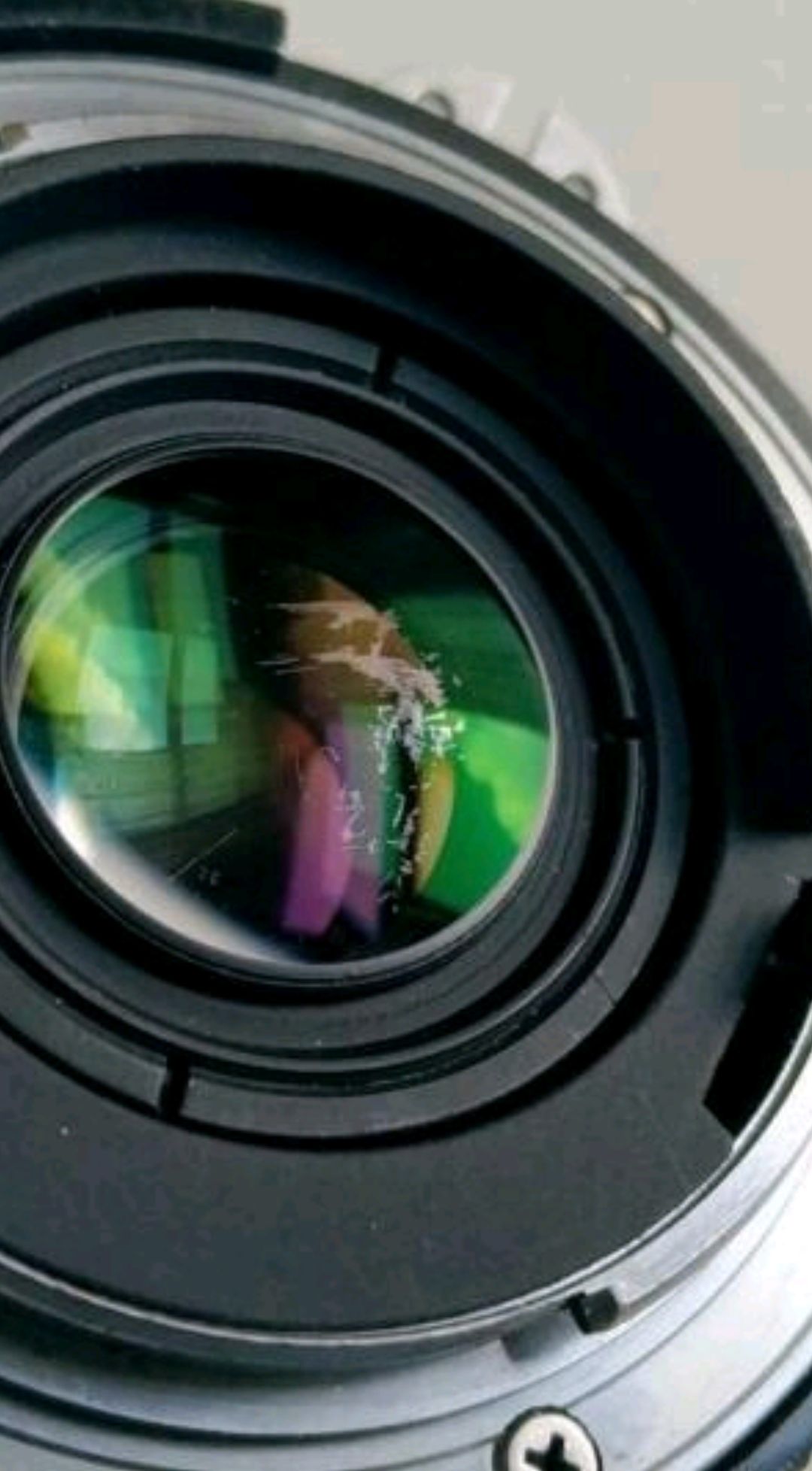
I picked up a Nikkor 28/2.8 yesterday (AI - non-CRC version) with pretty significant coating damage to the rear element.
#1

I know that the front element can take a severe beating and not affect image quality, but the rear element is more sensitive. Took some sample shots and discovered that this creates a real problem in the bokeh ...
#2

Other than this coating issue, the lens is in excellent condition. I have two options as I see it:
1) Wait for a cheap 28/2.8 AI with other issues but a good rear element; swap them out
2) Get rid of the coating altogether from the rear element
Since 2 does not preclude 1 from happening, I see no reason not to get rid of the coating completely. Is there a reason not to do this?
If I do go ahead with this plan, what is the best way to do this? I see MANY sources on the internet that talk about using everything from toothpaste to metal polish to sand to "grind" away the coating, but I would prefer to try a less "abusive" method first, if possible. The same internet sources also have plenty of people talking about the dangers of letting optical elements sit in solvents and cleaners, specifically citing coating damage. Can I simply leave the element in a bowl of vinegar or H202 or IPA overnight and expect results?
Also, as long as I am going to be doing this, any other mods to try and turn this lens into an "art lens"?[/img] |
|
| Nach oben |
|
 |
Zamo

Anmeldungsdatum: 08.02.2019
Beiträge: 168
|
Verfasst am: So Jul 18, 2021 9:23 am Titel: |
|
Verfasst am: So Jul 18, 2021 9:23 am Titel: |
|
|
Zamo wrote:
I have never cleaned any Nikkors (in fact, I don't own any Nikkors. Shame on me probably!), but I know for sure that ammonia can affect coatings in certain lenses. Don't use it to clean the glasses in a Konica Hexanon 40mm 1.8, for instance. So you could try and see.
BTW, yesterday I was navigating through tv channels (in Spain we say "zapping", but I don't think anyone else says that in English...) and saw a Spanish series (can't remember the name). Same thing happened as in your pictures. I could not take my eyes off of it (then I watched Chicago and The Miserables in a row, but that's another song  ). |
|
| Nach oben |
|
|
karthikrr
Anmeldungsdatum: 04.06.2019
Beiträge: 23
|
Verfasst am: Mo Jul 19, 2021 2:06 am Titel: |
|
Verfasst am: Mo Jul 19, 2021 2:06 am Titel: |
|
|
karthikrr wrote:
Its a strange thing that Nikkors don't get much attention in the adapted lens community. I had this same conversation with the guy who sold me this lens - why don't we see more discussions around Nikkor lenses in various forums?
My guess is that most people who buy Nikkor are not adapting, they are using them native on their Nikon cameras. And anybody who doesn't have a Nikon camera doesn't buy Nikkor either because its more expensive than M42, OR because the focus ring "turns the wrong way" ...
In any case, my experience with working on Nikkor lenses so far is that the bayonet screws are a NIGHTMARE to work with! In all the Nikkor lenses I've opened up, getting those damn screws out was always the hardest part of the job! I currently have a 135/3.5 Q waiting for AI conversion and I cannot get the screws out even using proper JIS screwdrivers... I bought a bottle of acetone now to try and soften the loctite on the screws.
And wow, you actually noticed weird artifacts on bokeh in a TV show? The most I have ever managed to catch is dust on the sensor ... But yeah, I do realize I have started paying more attention to the image characteristics nowadays and try to guess what kind of lens they used and so on ...
Oh and I imagine "surfing" is the closest English word to your "zapping"  |
|
| Nach oben |
|
|
Zamo
Anmeldungsdatum: 08.02.2019
Beiträge: 168
|
Verfasst am: Mo Jul 19, 2021 3:00 pm Titel: |
|
Verfasst am: Mo Jul 19, 2021 3:00 pm Titel: |
|
|
Zamo wrote:
| karthikrr hat folgendes geschrieben:: |
Its a strange thing that Nikkors don't get much attention in the adapted lens community. I had this same conversation with the guy who sold me this lens - why don't we see more discussions around Nikkor lenses in various forums?
My guess is that most people who buy Nikkor are not adapting, they are using them native on their Nikon cameras. And anybody who doesn't have a Nikon camera doesn't buy Nikkor either because its more expensive than M42, OR because the focus ring "turns the wrong way" ...
In any case, my experience with working on Nikkor lenses so far is that the bayonet screws are a NIGHTMARE to work with! In all the Nikkor lenses I've opened up, getting those damn screws out was always the hardest part of the job! I currently have a 135/3.5 Q waiting for AI conversion and I cannot get the screws out even using proper JIS screwdrivers... I bought a bottle of acetone now to try and soften the loctite on the screws.
And wow, you actually noticed weird artifacts on bokeh in a TV show? The most I have ever managed to catch is dust on the sensor ... But yeah, I do realize I have started paying more attention to the image characteristics nowadays and try to guess what kind of lens they used and so on ...
Oh and I imagine "surfing" is the closest English word to your "zapping" |
No idea about the Nikkors. Somehow I never felt attracted to Nikon or Canon... but, to be honest, i don't have a reason. Probably better to stay as I am, otherwise it is a whole new world to explore, and too little time.
As for TV, well... I am not a fan of Spanish productions. Quality is often quite low... I can't stand it. If at least it had good writing or good acting. Not even that most of the times (but that's me, many people watches them). And yes, I have seen this kind of things more than once!
But why do we say zapping? It is not even close to being Spanish! A mistery to me.
Anyway, back to your coatings. I would try ammonia (maybe try first 50/50 with H2O2 or plain water), but preferably only on the damaged part. If the other side of the glass has coatings you could damage them innecesarily. |
|
| Nach oben |
|
|
TeemÅ

Anmeldungsdatum: 07.04.2016
Beiträge: 586
Wohnort: Australia
|
Verfasst am: Mo Jul 19, 2021 5:00 pm Titel: |
|
Verfasst am: Mo Jul 19, 2021 5:00 pm Titel: |
|
|
TeemÅ wrote:
There is a chemical process to dissolve magnesium fluoride coatings however it's highly involved and needs to be repeated many times. Since these are not just simple MgF2 coatings but fairly complex multicoatings, the same process probably won't work. It looks like the damage must have gone through nearly all the layers of the multicoating since the transmission loss is so high in the bokeh.
In short, I think there is no way to remove it chemically by amateur means but perhaps you can try the ammonia and also salt water, short of doing repeated baths in strong acids.
Any abrasive action will destroy the lens surface and the whole image will be soft then. Being a 28/2.8, the depth of field is already deep. Stop down to F4 at a moderate distance and surely the problem area is cropped away? |
|
| Nach oben |
|
|
karthikrr
Anmeldungsdatum: 04.06.2019
Beiträge: 23
|
Verfasst am: Mo Jul 19, 2021 11:05 pm Titel: |
|
Verfasst am: Mo Jul 19, 2021 11:05 pm Titel: |
|
|
karthikrr wrote:
| Zamo hat folgendes geschrieben:: |
No idea about the Nikkors. Somehow I never felt attracted to Nikon or Canon... but, to be honest, i don't have a reason. Probably better to stay as I am, otherwise it is a whole new world to explore, and too little time.
As for TV, well... I am not a fan of Spanish productions. Quality is often quite low... I can't stand it. If at least it had good writing or good acting. Not even that most of the times (but that's me, many people watches them). And yes, I have seen this kind of things more than once!
But why do we say zapping? It is not even close to being Spanish! A mistery to me.
Anyway, back to your coatings. I would try ammonia (maybe try first 50/50 with H2O2 or plain water), but preferably only on the damaged part. If the other side of the glass has coatings you could damage them innecesarily. |
Actually, I know exactly what you mean about not being attracted to Nikon or Canon ... I find experimenting with lesser known brands (and when I get lucky, MUCH MORE WELL KNOWN brands) much more fun and interesting than more straightforward offerings from Nikon or Canon (or Pentax also for that matter) ... But I recently acquired a Nikon D750 and discovered that shooting full frame was a whole other experience after mucking around with APS-C and m4/3! I only had a Nikkor 50/2 and a broken (front element chipped) Mir-24H for Nikon mount, but already they were blowing my mind. Thus the move to acquire Nikkor MF lenses and I've already built a decent collection, and loving it!
That said, I am also simultaneously trying to mod a Helios 44m to give me infinity focus natively on the D750! Most people say its a pointless affair to try this, but I have a few dozen M42 lenses that I want to try to mod in this way ... In time ...
As for Spanish TV, I will take your word for it I only know about it from English sitcoms where they refer to it!
Zapping - tis a mystery indeed ... perhaps to do with "electricity"?
Coating - Ammonia mixture - Check! I did decide to live with it for a while before I did this though...
| TeemÅ hat folgendes geschrieben:: |
There is a chemical process to dissolve magnesium fluoride coatings however it's highly involved and needs to be repeated many times. Since these are not just simple MgF2 coatings but fairly complex multicoatings, the same process probably won't work. It looks like the damage must have gone through nearly all the layers of the multicoating since the transmission loss is so high in the bokeh.
In short, I think there is no way to remove it chemically by amateur means but perhaps you can try the ammonia and also salt water, short of doing repeated baths in strong acids.
Any abrasive action will destroy the lens surface and the whole image will be soft then. Being a 28/2.8, the depth of field is already deep. Stop down to F4 at a moderate distance and surely the problem area is cropped away? |
I am not going to try the abrasive method at all. Impulsively done enough things that went "against my better judgment" and without fail, it is always REGRET! The lens works fine and while a chemical method to remove the coating might be an interesting experiment, I definitely do not want to make it unusable by scratching the glass to hell!
No idea how the coating got so much damage. BUT, I wonder ... you are talking about transmission loss ... Wouldn't coating loss actually let more light through and thus result in a loss of contrast? In this case, the damaged part is actually darker making me wonder why light is being blocked...? |
|
| Nach oben |
|
|
visualopsins


Anmeldungsdatum: 05.03.2009
Beiträge: 11699
Wohnort: California
Expire: 2027-07-11
|
Verfasst am: Mo Jul 19, 2021 11:59 pm Titel: |
|
Verfasst am: Mo Jul 19, 2021 11:59 pm Titel: |
|
|
visualopsins wrote:
How Lens Coating Works
_________________
☮☮☮☮☮☮☮☮☮☮☮☮☮☮☮☮☮☮☮☮☮☮☮☮☮☮☮☮☮☮☮☮ like attracts like! ☮☮☮☮☮☮☮☮☮☮☮☮☮☮☮☮☮☮☮☮☮☮☮☮☮☮☮☮☮☮☮☮
Cameras: Sony ILCE-7RM2, Spotmatics II, F, and ESII, Nikon P4
Lenses:
M42 Asahi Optical Co., Takumar 1:4 f=35mm, 1:2 f=58mm (Sonnar), 1:2.4 f=58mm (Heliar), 1:2.2 f=55mm (Gaussian), 1:2.8 f=105mm (Model I), 1:2.8/105 (Model II), 1:5.6/200, Tele-Takumar 1:5.6/200, 1:6.3/300, Macro-Takumar 1:4/50, Auto-Takumar 1:2.3 f=35, 1:1.8 f=55mm, 1:2.2 f=55mm, Super-TAKUMAR 1:3.5/28 (fat), 1:2/35 (Fat), 1:1.4/50 (8-element), Super-Multi-Coated Fisheye-TAKUMAR 1:4/17, Super-Multi-Coated TAKUMAR 1:4.5/20, 1:3.5/24, 1:3.5/28, 1:2/35, 1:3.5/35, 1:1.8/85, 1:1.9/85 1:2.8/105, 1:3.5/135, 1:2.5/135 (II), 1:4/150, 1:4/200, 1:4/300, 1:4.5/500, Super-Multi-Coated Macro-TAKUMAR 1:4/50, 1:4/100, Super-Multi-Coated Bellows-TAKUMAR 1:4/100, SMC TAKUMAR 1:1.4/50, 1:1.8/55
M42 Carl Zeiss Jena Flektogon 2.4/35
Contax Carl Zeiss Vario-Sonnar T* 28-70mm F3.5-4.5
Pentax K-mount SMC PENTAX-A ZOOM 1:3.5 35~105mm, SMC PENTAX ZOOM 1:4 45~125mm
Nikon Micro-NIKKOR-P-C Auto 1:3.5 f=55mm, NIKKOR-P Auto 105mm f/2.5 Pre-AI (Sonnar), Micro-NIKKOR 105mm 1:4 AI, NIKKOR AI-S 35-135mm f/3,5-4,5
Solinon 1:5.6/18 ASPH.
Tamron SP 17mm f/3.5 (51B), Tamron SP 17mm f/3.5 (151B), SP 500mm f/8 (55BB), SP 70-210mm f/3.5 (19AH)
Vivitar 100mm 1:2.8 MC 1:1 Macro Telephoto (Kiron)
|
|
| Nach oben |
|
|
TeemÅ
Anmeldungsdatum: 07.04.2016
Beiträge: 586
Wohnort: Australia
|
Verfasst am: Di Jul 20, 2021 9:35 am Titel: |
|
Verfasst am: Di Jul 20, 2021 9:35 am Titel: |
|
|
TeemÅ wrote:
| karthikrr hat folgendes geschrieben:: |
| TeemÅ hat folgendes geschrieben:: |
There is a chemical process to dissolve magnesium fluoride coatings however it's highly involved and needs to be repeated many times. Since these are not just simple MgF2 coatings but fairly complex multicoatings, the same process probably won't work. It looks like the damage must have gone through nearly all the layers of the multicoating since the transmission loss is so high in the bokeh.
In short, I think there is no way to remove it chemically by amateur means but perhaps you can try the ammonia and also salt water, short of doing repeated baths in strong acids.
Any abrasive action will destroy the lens surface and the whole image will be soft then. Being a 28/2.8, the depth of field is already deep. Stop down to F4 at a moderate distance and surely the problem area is cropped away? |
I am not going to try the abrasive method at all. Impulsively done enough things that went "against my better judgment" and without fail, it is always REGRET! The lens works fine and while a chemical method to remove the coating might be an interesting experiment, I definitely do not want to make it unusable by scratching the glass to hell!
No idea how the coating got so much damage. BUT, I wonder ... you are talking about transmission loss ... Wouldn't coating loss actually let more light through and thus result in a loss of contrast? In this case, the damaged part is actually darker making me wonder why light is being blocked...? |
AR coating increases light transmission otherwise on an uncoated glass surface there is always 4-7% loss of light due to reflection. The loss of light can be thought of a loss of a portion of the image and therefore the contrast and resolution will be correspondingly weaker than a lens with very high transmission.
Personally I've not seen before such hard damage on a modern multicoating but it's on the rear lens and I suppose that is the main reason it's evident in the images. Grease does damage coatings but I think over a longer term and sometimes causing a corroded haze. Degreaser on the other hand, and in my experience, can damage a coating like this instantly. Maybe someone tried to wipe some gunk off with some bizarre 'cleaner'.
Is the damaged surface on the rear, or on the interior side? |
|
| Nach oben |
|
|
visualopsins
Anmeldungsdatum: 05.03.2009
Beiträge: 11699
Wohnort: California
Expire: 2027-07-11
|
Verfasst am: Di Jul 20, 2021 10:56 am Titel: |
|
Verfasst am: Di Jul 20, 2021 10:56 am Titel: |
|
|
visualopsins wrote:
Without coatings reflected light diffuses, "fogging" the image. Coatings reduce the reflections, clearing the fog -- there is more transmission, less "fog". The increased transmission does not make the image brighter; the darker portions of the image are cleared of the "fog".
The coating damage appears dark in out of focus highlights because the light that would pass through due to coating is reflected, i.e., blocked.
_________________
☮☮☮☮☮☮☮☮☮☮☮☮☮☮☮☮☮☮☮☮☮☮☮☮☮☮☮☮☮☮☮☮ like attracts like! ☮☮☮☮☮☮☮☮☮☮☮☮☮☮☮☮☮☮☮☮☮☮☮☮☮☮☮☮☮☮☮☮
Cameras: Sony ILCE-7RM2, Spotmatics II, F, and ESII, Nikon P4
Lenses:
M42 Asahi Optical Co., Takumar 1:4 f=35mm, 1:2 f=58mm (Sonnar), 1:2.4 f=58mm (Heliar), 1:2.2 f=55mm (Gaussian), 1:2.8 f=105mm (Model I), 1:2.8/105 (Model II), 1:5.6/200, Tele-Takumar 1:5.6/200, 1:6.3/300, Macro-Takumar 1:4/50, Auto-Takumar 1:2.3 f=35, 1:1.8 f=55mm, 1:2.2 f=55mm, Super-TAKUMAR 1:3.5/28 (fat), 1:2/35 (Fat), 1:1.4/50 (8-element), Super-Multi-Coated Fisheye-TAKUMAR 1:4/17, Super-Multi-Coated TAKUMAR 1:4.5/20, 1:3.5/24, 1:3.5/28, 1:2/35, 1:3.5/35, 1:1.8/85, 1:1.9/85 1:2.8/105, 1:3.5/135, 1:2.5/135 (II), 1:4/150, 1:4/200, 1:4/300, 1:4.5/500, Super-Multi-Coated Macro-TAKUMAR 1:4/50, 1:4/100, Super-Multi-Coated Bellows-TAKUMAR 1:4/100, SMC TAKUMAR 1:1.4/50, 1:1.8/55
M42 Carl Zeiss Jena Flektogon 2.4/35
Contax Carl Zeiss Vario-Sonnar T* 28-70mm F3.5-4.5
Pentax K-mount SMC PENTAX-A ZOOM 1:3.5 35~105mm, SMC PENTAX ZOOM 1:4 45~125mm
Nikon Micro-NIKKOR-P-C Auto 1:3.5 f=55mm, NIKKOR-P Auto 105mm f/2.5 Pre-AI (Sonnar), Micro-NIKKOR 105mm 1:4 AI, NIKKOR AI-S 35-135mm f/3,5-4,5
Solinon 1:5.6/18 ASPH.
Tamron SP 17mm f/3.5 (51B), Tamron SP 17mm f/3.5 (151B), SP 500mm f/8 (55BB), SP 70-210mm f/3.5 (19AH)
Vivitar 100mm 1:2.8 MC 1:1 Macro Telephoto (Kiron)
|
|
| Nach oben |
|
|
|
|
|
Du kannst keine Beiträge in dieses Forum schreiben.
Du kannst auf Beiträge in diesem Forum nicht antworten.
Du kannst deine Beiträge in diesem Forum nicht bearbeiten.
Du kannst deine Beiträge in diesem Forum nicht löschen.
Du kannst an Umfragen in diesem Forum nicht mitmachen.
|
 Deutsch
 Español
 中文
 Magyar
 Русский
 日本語
 Français