| Vorheriges Thema anzeigen :: Nächstes Thema anzeigen |
| Autor |
Nachricht |
alaios 

Anmeldungsdatum: 24.01.2014
Beiträge: 724
|
 Verfasst am: So März 23, 2014 5:13 pm Titel: What is a rangefinder and viewfinder? |
|
Verfasst am: So März 23, 2014 5:13 pm Titel: What is a rangefinder and viewfinder? |
|
|
alaios wrote:
Hi all,
I am new to this nice place and I wonder what these two devices are (I am not intrested in learning only for manual cameras)
From me a rangefinder I thought it would be something like a light beamer where once you point something with that it returns you back the distance from the subject.
Is it something like that or is just the "eye" on the top of my camera?
Regards
Alex |
|
| Nach oben |
|
 |
Layer-cake

Anmeldungsdatum: 18.03.2013
Beiträge: 560
Wohnort: Cape Town
|
Verfasst am: So März 23, 2014 7:26 pm Titel: |
|
Verfasst am: So März 23, 2014 7:26 pm Titel: |
|
|
Layer-cake wrote:
what you're thinking about there is a autofocus viewfinder camera like a nikon L35AF, it has an infrared system that automatically adjusts the lens yo focus on an item.
a rangefinder camera normally has a mirror system built in that couples the focus mechanism on the lens to the mirrors in the view window that allows you to adjust the focus of the lens.
there are two separate images that are projected on the mirrors that line up when focusing depending on what object you are focusing on, like a Konica iii or versions that have removable lenses like leicas for instance
a viewfinder basically has a window that you look through to view what you are taking a picture of but even though you can focus the lens on many models you see no projected images in the viewfinder so you have to guess the focusing distance of the object or use a separate rangefinder to assist you like a kodak retinette 1A or instamatic 101
personally I prefer range finders for their ease of use, some AF are very cool and highly regarded |
|
| Nach oben |
|
|
philslizzy


Anmeldungsdatum: 07.08.2012
Beiträge: 4753
Wohnort: Cheshire, England
|
Verfasst am: Mo März 24, 2014 12:40 am Titel: |
|
Verfasst am: Mo März 24, 2014 12:40 am Titel: |
|
|
philslizzy wrote:
A rangefinder is basically a sideways periscope.
There will be a straight-through lens with the view from the end of the periscope superimposed on it. Both seeing a slightly different view of the subject. A mirror in the 'periscope' is connected to the focusing mechanism of the lens. When the lens is focused the superimposed image moves left or right, when they overlap precisely the subject is in focus. Usually the image from the 'periscope' is tinted yellow. All rangefinders are different but they all work in precisely the same way.
My old Zorki 2C has a separate rangefinder - built in -but i must focus with it first and frame with the viewfinder next.
_________________
Hero in the 'messin-with-cameras-for-the-hell-of-it department'. Official. |
|
| Nach oben |
|
|
Layer-cake
Anmeldungsdatum: 18.03.2013
Beiträge: 560
Wohnort: Cape Town
|
Verfasst am: Mo März 24, 2014 2:47 pm Titel: |
|
Verfasst am: Mo März 24, 2014 2:47 pm Titel: |
|
|
Layer-cake wrote:
Phil explained it properly here  |
|
| Nach oben |
|
|
kuuan

Anmeldungsdatum: 14.01.2008
Beiträge: 4569
Wohnort: right now: Austria
Expire: 2014-12-26
|
Verfasst am: Mo März 24, 2014 3:07 pm Titel: |
|
Verfasst am: Mo März 24, 2014 3:07 pm Titel: |
|
|
kuuan wrote:
well explained by Phil, maybe the Wikipedia article helps too: http://en.wikipedia.org/wiki/Rangefinder_camera
viewfinder is either an optical as in SLR, that is view is through lens via mirror + pentaprism or pentamirror, or electronic, kind of a small 'TV' as in mirrorless cameras
more Wikipedia articles: http://en.wikipedia.org/wiki/Viewfinder http://en.wikipedia.org/wiki/Pentaprism http://en.wikipedia.org/wiki/Pentamirror
_________________
my photos on flickr: https://www.flickr.com/photos/kuuan/collections |
|
| Nach oben |
|
|
duckrider

Anmeldungsdatum: 11.12.2013
Beiträge: 437
Wohnort: Germany
|
Verfasst am: Mo März 24, 2014 4:53 pm Titel: |
|
Verfasst am: Mo März 24, 2014 4:53 pm Titel: |
|
|
duckrider wrote:
| philslizzy hat folgendes geschrieben:: |
| A rangefinder is basically a sideways periscope. |
Not always, not always!
In one case it's like a periscope turned upwards down.

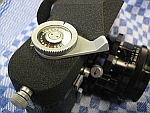
ALPA 7 has a 45° SLR finder & coupled (for 50mm lenses only) rangefinder.
_________________
T*homas
(from the origin land of Zeiss, an obligation  )
Zeiss ZF 3.5/18, 2.8/25, 2.0/35, 2/50macro, 1.4/50, 1.4/85, 2/100macro
Nikon Df, F2AS, F2A, F3/T, FM
ALPA 11Si, Angulon 2,8/35 ; Xenar 1,9/50 ; Tele-Tessar 4/200
Leica R3 SAFARI Safari Lenses 2.8/28 ; 2/50 ; 4/180
Rolleiflex SL 350 , Zeiss 2,8/16 ; 4/18 ; 2,8/25 ; 2,8/35 ; 1,4/35 ; 1,8/50 ; 2,8/85 ; 1,4/85 ; 4/135 ; 4/200
Leica M9-P, Leica M4-2, Tri-Elmar "Wate", Distagon 2,8/21, Biogon 2,8/28, Biogon 2/35, Planar 2/50, Tessar 4/85, M-Elmar 50mm, Summicron 90
Sony alpha 7r & adapters for all lenses above |
|
| Nach oben |
|
|
philslizzy
Anmeldungsdatum: 07.08.2012
Beiträge: 4753
Wohnort: Cheshire, England
|
Verfasst am: Mo März 24, 2014 7:24 pm Titel: |
|
Verfasst am: Mo März 24, 2014 7:24 pm Titel: |
|
|
philslizzy wrote:
This is another, but they all do the same job.

A helluva rangefinder!
This type is separate from the camera and attaches to the accessory shoe. The range finder has a little wheel that you turn and you read the distance from the wheel and transfer it to your camera

A more normal rangefinder, smaller and probably less accurate than the Leitz one above. The wider the base i.e. the longer the periscope the more accurate it is.

_________________
Hero in the 'messin-with-cameras-for-the-hell-of-it department'. Official. |
|
| Nach oben |
|
|
alaios
Anmeldungsdatum: 24.01.2014
Beiträge: 724
|
Verfasst am: Di März 25, 2014 8:39 am Titel: |
|
Verfasst am: Di März 25, 2014 8:39 am Titel: |
|
|
alaios wrote:
Hi I had a look on the very nice links you provided.
If I understood it right these cameras do not make noise (they are much more quiet) compared to the SLRs.
I am not sure though how the rangefinders "change" once you install a new lens. Rangefinder reminded the disposable use once kodak cameras one could buy and dispose them after the film was shooted. How rangefinder adjusts considerably with the given prime lens installed?
What would be the cost for a second hand rangefinder and a lens?. Would I be able in such cameras to use, for example, my minoltas?
Regards
Alex |
|
| Nach oben |
|
|
philslizzy
Anmeldungsdatum: 07.08.2012
Beiträge: 4753
Wohnort: Cheshire, England
|
|
| Nach oben |
|
|
alaios
Anmeldungsdatum: 24.01.2014
Beiträge: 724
|
Verfasst am: Di März 25, 2014 1:27 pm Titel: |
|
Verfasst am: Di März 25, 2014 1:27 pm Titel: |
|
|
alaios wrote:
Hi
I just wanted for now to thank for this nice and detailed post you shared.
To be honest I will need time to read it over and over again to integrate all this new knowledge.
I like with these cameras that they are small, are sneakier too. I will have a look today on old models that can be cheap on ebay but have very very good quality. I am confused a bit with the lenses (I do not quite understand all these abbreviations M42,M39, M...) but I guess if I read over and over I will start understand better
Alex |
|
| Nach oben |
|
|
skida
Anmeldungsdatum: 02.03.2012
Beiträge: 1826
Wohnort: North East England
|
Verfasst am: Di März 25, 2014 3:38 pm Titel: |
|
Verfasst am: Di März 25, 2014 3:38 pm Titel: |
|
|
skida wrote:
M42, M39 etc are the thread size and type for lens mounts. M42 for example is a fairly common screw-in lens mount as used on Pentax Spotmatic, Zenit E and Praktica Nova snd TL cameras, amongst others. The M39 mount, I believe, is more common on rangefinders like Leica, Kiev and others.
When searching for lenses, you don't need to know all the technical details, just the type of mount. Some further info:
http://en.wikipedia.org/wiki/Lens_mount
_________________
Lots of 35mm Film Cameras
Lots of Lenses
New Vlog on Youtube called "The Olduns Shot"
https://www.youtube.com/channel/UCBHCOHaIrcYr7s3is1EcqxQ |
|
| Nach oben |
|
|
philslizzy
Anmeldungsdatum: 07.08.2012
Beiträge: 4753
Wohnort: Cheshire, England
|
Verfasst am: Mi März 26, 2014 12:13 am Titel: |
|
Verfasst am: Mi März 26, 2014 12:13 am Titel: |
|
|
philslizzy wrote:
The 42 in M42 is the width of the screw thread i.e 42mm M39 is 39mm. M42 is the native mount of older Pentaxes, Praktica, Zenits and others. It is regarded as a universal mount.
M39mm lenses for cameras come in 3 flavours, confusingly all have the same 39mm thread.
The first type is lenses for SLR's. Older Zenits used a 39mm thread, the flange focal distance is longer than rangefinder cameras and there is no need for a rangefinder coupling. A thin adapter ring can be used to allow you to use SLR M39 lenses on an M42 SLR.
Next is M39 for Leica type rangefinders like my Zorki 2c mentioned above this is often referred to a L39 (Leica 39) to avoid confusion.
Braun used a similar system to Leitz, other manufacturers used this system too, but the flange focal distance is longer so they are incompatible. we refer to it as B39 (Braun 39)
Then there are enlarging lenses. Most modern ones (from the last 50 years or so) use M39 screw, although 42mm and 44mm exist too. They are not designed to work on cameras and do not have a focusing mechanism built in, that was achieved by a bellows arrangement on the enlarger.
Hope that explains what you need to know.
But reading between the lines I would guess you want a compact rangefinder for candid photos. I would suggest a fixed lens type. I use an Olympus 35RC, this is mine in the photo. I've given it a new skin. It's a lovely camera to use and almost silent as it has a 'between the lens' shutter that just goes 'tick' when it operates. You can 'zone focus' it and let depth of field take care of the focus

as I said in my previous post Canon and Minolta did similar rangefinders equally as good. Then there were Fujica, Petri, Yashica, Rank and Mamiya. plus others.
_________________
Hero in the 'messin-with-cameras-for-the-hell-of-it department'. Official. |
|
| Nach oben |
|
|
alaios
Anmeldungsdatum: 24.01.2014
Beiträge: 724
|
Verfasst am: Mi März 26, 2014 3:57 am Titel: |
|
Verfasst am: Mi März 26, 2014 3:57 am Titel: |
|
|
alaios wrote:
great small camera you have. Does it take 35mm film too? On ebay does not look that expensive too. If I get this right this camera has a fixed lens . How the light meter works? Great stuff here.
You should guys honour the stuff you know and your hidden treasure |
|
| Nach oben |
|
|
alaios
Anmeldungsdatum: 24.01.2014
Beiträge: 724
|
Verfasst am: Mi März 26, 2014 6:18 pm Titel: |
|
Verfasst am: Mi März 26, 2014 6:18 pm Titel: |
|
|
alaios wrote:
hmmm looks hard to spot such camera on ebay
there are only worldwide three entries
and there I also found the
Ricoh 500G which is suggested as an alternative...
Alex |
|
| Nach oben |
|
|
philslizzy
Anmeldungsdatum: 07.08.2012
Beiträge: 4753
Wohnort: Cheshire, England
|
Verfasst am: Mi März 26, 2014 11:56 pm Titel: |
|
Verfasst am: Mi März 26, 2014 11:56 pm Titel: |
|
|
philslizzy wrote:
Yes it uses 35mm film, the automation us shutter priority. That means you set the shutter speed on the dial on top of the camera and it selects the aperture. You have full manual control if you want it.
I suggested a camera like the 35RC, others at the top of my list would be:
Canon Canonet QL17 and QL19,
Konica C35 Automatic,
Minolta Hi-Matic E,
Ricoh 500G
and others in the Olympus range.
These are smaller cameras, the Yashica Electro's are superb performers too but generally unreliable unless you get a great one. They are bigger than the Olympus.
presently on ebay here are a few I would recommend
Petri: Klicke hier, um es auf Ebay zu sehen Klicke hier, um es auf Ebay zu sehen
Olympus 35DC Klicke hier, um es auf Ebay zu sehen
Canon Canonet Klicke hier, um es auf Ebay zu sehen
_________________
Hero in the 'messin-with-cameras-for-the-hell-of-it department'. Official. |
|
| Nach oben |
|
|
buerokratiehasser
Anmeldungsdatum: 12.06.2011
Beiträge: 470
|
Verfasst am: Do März 27, 2014 10:02 am Titel: |
|
Verfasst am: Do März 27, 2014 10:02 am Titel: |
|
|
buerokratiehasser wrote:
Ken Rockwell has some good info
Executive summary: RF are good for panorama and street, next to useless for tele, macro
Rangefinder is technically a gizmo that measures distance to subject.
Viewfinder is the hole you peek into to see your image, in whatever type of camera.
Typical "rangefinder" as a camera model has viewfinder with rangfinder split focusing. Typical RF is 35mm although there are digital models, and Mamiya 6/7 for 120.
I don't even own any rangefinders unless you want to count the silly autofocus point and shoot. (Never got one, they are still quite expensive and problem is, 30yo probably needs service/adjustment, which is non trivial. 30 yo SLR can have faults but usually not of the "focus mismatch" variety)
Can tell you however no you will not be able to use Minolta SLR lenses (unless CLE/rangefinder/Leica)
M42/M39 thread or mount is one thing, but RF lenses sit much closer to film. |
|
| Nach oben |
|
|
alaios
Anmeldungsdatum: 24.01.2014
Beiträge: 724
|
Verfasst am: Do März 27, 2014 11:24 am Titel: |
|
Verfasst am: Do März 27, 2014 11:24 am Titel: |
|
|
alaios wrote:
Hi
the small ones suggested by philslizzy I do not think they would need repairs as the lens is fixed and range finder would always work great (thats my guess though)
Alex |
|
| Nach oben |
|
|
Farside

Anmeldungsdatum: 01.09.2007
Beiträge: 6579
Wohnort: Ireland
Expire: 2013-12-27
|
Verfasst am: Do März 27, 2014 7:12 pm Titel: |
|
Verfasst am: Do März 27, 2014 7:12 pm Titel: |
|
|
Farside wrote:
| duckrider hat folgendes geschrieben:: |
| philslizzy hat folgendes geschrieben:: |
| A rangefinder is basically a sideways periscope. |
Not always, not always!
In one case it's like a periscope turned upwards down.
ALPA 7 has a 45° SLR finder & coupled (for 50mm lenses only) rangefinder. |
Blimey; I didn't know Bloody Stupid Johnson ever did a camera design.
_________________
Dave - Moderator
Camera Fiend and Biograph Operator
If I wanted soot and whitewash I'd be a chimney sweep and house painter.
The Lenses of Farside (click)
BUY FRESH FOMAPAN TO HELP KEEP THE FACTORY ALIVE ---
Foma Campaign topic -
http://forum.mflenses.com/foma-campaign-t55443.html
FOMAPAN on forum -
http://www.mflenses.com/fs.php?sw=Fomapan
Webshop Norway
http://www.fomafoto.com/
Webshop Czech
https://fomaobchod.cz/inshop/scripts/shop.aspx?action=DoChangeLanguage&LangID=4 |
|
| Nach oben |
|
|
alaios
Anmeldungsdatum: 24.01.2014
Beiträge: 724
|
Verfasst am: Do März 27, 2014 8:51 pm Titel: |
|
Verfasst am: Do März 27, 2014 8:51 pm Titel: |
|
|
alaios wrote:
Hi there,
after googling this evening I am also giving some more "famous" models (Warning: I am very new to the game so take the below with caution)
Konica Auto S2,
Yashica Electro 35 GSM
Minolta 7sll
Olympus RC
Olympus SP35
Canon QL 17 G-III
Ricoh 500G
Minolta Minoltina AL-S
I guess the hard here is to select one to find over ebay  Damn you google the more you search the more models you find
Alex |
|
| Nach oben |
|
|
buerokratiehasser
Anmeldungsdatum: 12.06.2011
Beiträge: 470
|
Verfasst am: Fr März 28, 2014 9:31 am Titel: |
|
Verfasst am: Fr März 28, 2014 9:31 am Titel: |
|
|
buerokratiehasser wrote:
Just a small bit of advice when buying
Ebayers like to call anything "rangefinder", "SLR" etc. - check image of actual item.
Also, many brands had - under the same name - models with "coupled rangefinder" (= rangefinder), "uncoupled rangefinder" (need to measure and manually copy to range scale) and uh, "viewfinder".
BESSA folders and Altix I think, had real RF only in top models.
Real RF usually given away by presence of second hole (required for the RF measuring base distance) but holes can also be to fool you or for exposure measuring. |
|
| Nach oben |
|
|
philslizzy
Anmeldungsdatum: 07.08.2012
Beiträge: 4753
Wohnort: Cheshire, England
|
Verfasst am: Fr März 28, 2014 10:06 am Titel: |
|
Verfasst am: Fr März 28, 2014 10:06 am Titel: |
|
|
philslizzy wrote:
Good luck!!
_________________
Hero in the 'messin-with-cameras-for-the-hell-of-it department'. Official. |
|
| Nach oben |
|
|
alaios
Anmeldungsdatum: 24.01.2014
Beiträge: 724
|
Verfasst am: Fr März 28, 2014 11:26 am Titel: |
|
Verfasst am: Fr März 28, 2014 11:26 am Titel: |
|
|
alaios wrote:
Haha thanks and yes it would turn to be an odyssey to find one to play with.
Actually most of these are also aperture priority but I would like to have also manual control ....
I will post soon what prices I find and ask for more advice
A |
|
| Nach oben |
|
|
philslizzy
Anmeldungsdatum: 07.08.2012
Beiträge: 4753
Wohnort: Cheshire, England
|
Verfasst am: Fr März 28, 2014 11:05 pm Titel: |
|
Verfasst am: Fr März 28, 2014 11:05 pm Titel: |
|
|
philslizzy wrote:
Manual control AND automatic, you are starting to talk big bucks. Many older models have full manual and a light meter built in.
_________________
Hero in the 'messin-with-cameras-for-the-hell-of-it department'. Official. |
|
| Nach oben |
|
|
|
|
 Deutsch
 Español
 中文
 Magyar
 Русский
 日本語
 Français


