| Vorheriges Thema anzeigen :: Nächstes Thema anzeigen |
| Autor |
Nachricht |
kds315* 


Anmeldungsdatum: 12.03.2008
Beiträge: 16911
Wohnort: Kehl, Germany
Expire: 2021-03-09
|
 Verfasst am: Sa Sep 11, 2010 5:41 pm Titel: Russian Mars lens meets Rudbeckia fulgida |
|
Verfasst am: Sa Sep 11, 2010 5:41 pm Titel: Russian Mars lens meets Rudbeckia fulgida |
|
|
kds315* wrote:
Well, some long time ago I was able to "liberate" the last two surviving multispectral quartz fluorite lenses from the russian mission to Mars. Made by LOMO and designed by GOI, they represent (to me) a top result of the designers under Prof. Volossov who headed the optical design department of GOI in St Petersburg. Transmission is flat approx. 65% for 230...1000nm. Center resolution is approx. 80lpm
Long story short, here now some results using that no-focusshift lens...
Visual image (400-700nm):

Ultraviolet image (300-400nm):

Butterfly vision image (UV mapped into human visual range as blue):

Here a detail crop ... note the spider webs.

Quite amazing what the Russians have calculated without computers many years ago!!
_________________
Klaus - Admin
"S'il vient a point, me souviendra" [Thomas Bohier (1460-1523)]
http://www.macrolenses.de for macro and special lens info
http://www.pbase.com/kds315/uv_photos for UV Images and lens/filter info
https://www.flickr.com/photos/kds315/albums my albums using various lenses
http://photographyoftheinvisibleworld.blogspot.com/ my UV BLOG
http://www.travelmeetsfood.com/blog Food + Travel BLOG
https://galeriafotografia.com Architecture + Drone photography
Currently most FAV lens(es):
X80QF f3.2/80mm
Hypergon f11/26mm
ELCAN UV f5.6/52mm
Zeiss UV-Planar f4/60mm
Zeiss UV-Planar f2/62mm
Lomo Уфар-12 f2.5/41mm
Lomo Зуфар-2 f4.0/350mm
Lomo ZIKAR-1A f1.2/100mm
Nikon UV Nikkor f4.5/105mm
Zeiss UV-Sonnar f4.3/105mm
CERCO UV-VIS-NIR f1.8/45mm
CERCO UV-VIS-NIR f4.1/94mm
CERCO UV-VIS-NIR f2.8/100mm
Steinheil Quarzobjektiv f1.8/50mm
Pentax Quartz Takumar f3.5/85mm
Carl Zeiss Jena UV-Objektiv f4/60mm
NYE OPTICAL Lyman-Alpha II f1.1/90mm
NYE OPTICAL Lyman-Alpha I f2.8/200mm
COASTAL OPTICS f4/60mm UV-VIS-IR Apo
COASTAL OPTICS f4.5/105mm UV-Micro-Apo
Pentax Ultra-Achromatic Takumar f4.5/85mm
Pentax Ultra-Achromatic Takumar f5.6/300mm
Rodenstock UV-Rodagon f5.6/60mm + 105mm + 150mm
|
|
| Nach oben |
|
 |
arhi_tectu1


Anmeldungsdatum: 09.02.2009
Beiträge: 315
|
Verfasst am: Sa Sep 11, 2010 6:52 pm Titel: |
|
Verfasst am: Sa Sep 11, 2010 6:52 pm Titel: |
|
|
arhi_tectu1 wrote:
Fantastic !
Regards
Catalin
_________________
MF- CZJ 180/2.8@CZJ 50/2.8@Contax CZ 50/1.4@Contax CZ 135/2.8@Nikkor P 180/2.8@Helios 44@Mir 37/2.8@Industar 50/3.5@Pentacon 28/2.8@Pentacon 300/4
AF- Canon 70-200/4L@Canon 60/2.8Macro@Tokina 11-16/2.8
Camera Canon 40D |
|
| Nach oben |
|
|
fish4570

Anmeldungsdatum: 06.01.2010
Beiträge: 4514
Wohnort: At the confluence of the Locust Fork of the Warrior River and Black Creek, Alabama
Expire: 2012-03-21
|
Verfasst am: Sa Sep 11, 2010 7:04 pm Titel: |
|
Verfasst am: Sa Sep 11, 2010 7:04 pm Titel: |
|
|
fish4570 wrote:
Uh, WOW!
_________________
Paul
I chase Light
http://blackcreekjournal.blogspot.com/ |
|
| Nach oben |
|
|
Attila

Anmeldungsdatum: 24.02.2007
Beiträge: 58002
Expire: 2025-11-18
|
Verfasst am: Sa Sep 11, 2010 7:10 pm Titel: |
|
Verfasst am: Sa Sep 11, 2010 7:10 pm Titel: |
|
|
Attila wrote:
Wow! This means rarity I guess... |
|
| Nach oben |
|
|
kds315*
Anmeldungsdatum: 12.03.2008
Beiträge: 16911
Wohnort: Kehl, Germany
Expire: 2021-03-09
|
Verfasst am: Sa Sep 11, 2010 7:12 pm Titel: |
|
Verfasst am: Sa Sep 11, 2010 7:12 pm Titel: |
|
|
kds315* wrote:
Yep, only three (3) know to exist - I have two of them and know the other owner.
_________________
Klaus - Admin
"S'il vient a point, me souviendra" [Thomas Bohier (1460-1523)]
http://www.macrolenses.de for macro and special lens info
http://www.pbase.com/kds315/uv_photos for UV Images and lens/filter info
https://www.flickr.com/photos/kds315/albums my albums using various lenses
http://photographyoftheinvisibleworld.blogspot.com/ my UV BLOG
http://www.travelmeetsfood.com/blog Food + Travel BLOG
https://galeriafotografia.com Architecture + Drone photography
Currently most FAV lens(es):
X80QF f3.2/80mm
Hypergon f11/26mm
ELCAN UV f5.6/52mm
Zeiss UV-Planar f4/60mm
Zeiss UV-Planar f2/62mm
Lomo Уфар-12 f2.5/41mm
Lomo Зуфар-2 f4.0/350mm
Lomo ZIKAR-1A f1.2/100mm
Nikon UV Nikkor f4.5/105mm
Zeiss UV-Sonnar f4.3/105mm
CERCO UV-VIS-NIR f1.8/45mm
CERCO UV-VIS-NIR f4.1/94mm
CERCO UV-VIS-NIR f2.8/100mm
Steinheil Quarzobjektiv f1.8/50mm
Pentax Quartz Takumar f3.5/85mm
Carl Zeiss Jena UV-Objektiv f4/60mm
NYE OPTICAL Lyman-Alpha II f1.1/90mm
NYE OPTICAL Lyman-Alpha I f2.8/200mm
COASTAL OPTICS f4/60mm UV-VIS-IR Apo
COASTAL OPTICS f4.5/105mm UV-Micro-Apo
Pentax Ultra-Achromatic Takumar f4.5/85mm
Pentax Ultra-Achromatic Takumar f5.6/300mm
Rodenstock UV-Rodagon f5.6/60mm + 105mm + 150mm
|
|
| Nach oben |
|
|
Attila
Anmeldungsdatum: 24.02.2007
Beiträge: 58002
Expire: 2025-11-18
|
Verfasst am: Sa Sep 11, 2010 7:30 pm Titel: |
|
Verfasst am: Sa Sep 11, 2010 7:30 pm Titel: |
|
|
Attila wrote:
| kds315* hat folgendes geschrieben:: |
| Yep, only three (3) know to exist - I have two of them and know the other owner. |
Dang!  |
|
| Nach oben |
|
|
RenseH


Anmeldungsdatum: 13.06.2009
Beiträge: 570
Wohnort: Zetten - The Netherlands
Expire: 2013-01-14
|
|
| Nach oben |
|
|
torbod

Anmeldungsdatum: 31.01.2010
Beiträge: 379
Wohnort: Sweden
|
Verfasst am: Sa Sep 11, 2010 7:38 pm Titel: |
|
Verfasst am: Sa Sep 11, 2010 7:38 pm Titel: |
|
|
torbod wrote:
Sweet 
What mount is the lens? How did you adapt it to the camera?
_________________
For Sale or Trade: Pick from the list below.
Manual Lenses: CV 15 4.5 | MIR-20H 20 3.5 | Elmarit-R 28 2.8 | Flektogon MC 35 2.4 | S-M-C Tak 50 1.4 | Rollei 50 1.8 HFT | Helios 44-3 MC 58 2 | MC ROKKOR-X 58 1.2 | MacroPlanar 60 2.8 | Vega-12b 90 2.8 | Tamron 52B 90 2.5 | CZJ 135 3.5 | Jupiter-21A 200 4 | Tair-3s 300 4.5 | KOHBEPTEP K-1 | Takumar x2 |
Camera: Sony Nex 5N |
|
|
| Nach oben |
|
|
kds315*
Anmeldungsdatum: 12.03.2008
Beiträge: 16911
Wohnort: Kehl, Germany
Expire: 2021-03-09
|
Verfasst am: Sa Sep 11, 2010 7:40 pm Titel: |
|
Verfasst am: Sa Sep 11, 2010 7:40 pm Titel: |
|
|
kds315* wrote:
M42, not really complicated to mount.
_________________
Klaus - Admin
"S'il vient a point, me souviendra" [Thomas Bohier (1460-1523)]
http://www.macrolenses.de for macro and special lens info
http://www.pbase.com/kds315/uv_photos for UV Images and lens/filter info
https://www.flickr.com/photos/kds315/albums my albums using various lenses
http://photographyoftheinvisibleworld.blogspot.com/ my UV BLOG
http://www.travelmeetsfood.com/blog Food + Travel BLOG
https://galeriafotografia.com Architecture + Drone photography
Currently most FAV lens(es):
X80QF f3.2/80mm
Hypergon f11/26mm
ELCAN UV f5.6/52mm
Zeiss UV-Planar f4/60mm
Zeiss UV-Planar f2/62mm
Lomo Уфар-12 f2.5/41mm
Lomo Зуфар-2 f4.0/350mm
Lomo ZIKAR-1A f1.2/100mm
Nikon UV Nikkor f4.5/105mm
Zeiss UV-Sonnar f4.3/105mm
CERCO UV-VIS-NIR f1.8/45mm
CERCO UV-VIS-NIR f4.1/94mm
CERCO UV-VIS-NIR f2.8/100mm
Steinheil Quarzobjektiv f1.8/50mm
Pentax Quartz Takumar f3.5/85mm
Carl Zeiss Jena UV-Objektiv f4/60mm
NYE OPTICAL Lyman-Alpha II f1.1/90mm
NYE OPTICAL Lyman-Alpha I f2.8/200mm
COASTAL OPTICS f4/60mm UV-VIS-IR Apo
COASTAL OPTICS f4.5/105mm UV-Micro-Apo
Pentax Ultra-Achromatic Takumar f4.5/85mm
Pentax Ultra-Achromatic Takumar f5.6/300mm
Rodenstock UV-Rodagon f5.6/60mm + 105mm + 150mm
|
|
| Nach oben |
|
|
torbod
Anmeldungsdatum: 31.01.2010
Beiträge: 379
Wohnort: Sweden
|
Verfasst am: Sa Sep 11, 2010 8:24 pm Titel: |
|
Verfasst am: Sa Sep 11, 2010 8:24 pm Titel: |
|
|
torbod wrote:
Easy mount indeed.
Cool to have two out of three, thats a rare collection.
_________________
For Sale or Trade: Pick from the list below.
Manual Lenses: CV 15 4.5 | MIR-20H 20 3.5 | Elmarit-R 28 2.8 | Flektogon MC 35 2.4 | S-M-C Tak 50 1.4 | Rollei 50 1.8 HFT | Helios 44-3 MC 58 2 | MC ROKKOR-X 58 1.2 | MacroPlanar 60 2.8 | Vega-12b 90 2.8 | Tamron 52B 90 2.5 | CZJ 135 3.5 | Jupiter-21A 200 4 | Tair-3s 300 4.5 | KOHBEPTEP K-1 | Takumar x2 |
Camera: Sony Nex 5N |
|
|
| Nach oben |
|
|
poilu
Anmeldungsdatum: 26.08.2007
Beiträge: 10476
Wohnort: Greece
Expire: 2019-08-29
|
Verfasst am: Sa Sep 11, 2010 8:33 pm Titel: |
|
Verfasst am: Sa Sep 11, 2010 8:33 pm Titel: |
|
|
poilu wrote:
fantastic!
_________________
T* |
|
| Nach oben |
|
|
Himself
Anmeldungsdatum: 01.03.2007
Beiträge: 3315
Wohnort: Montreal
Expire: 2013-05-30
|
Verfasst am: Sa Sep 11, 2010 9:47 pm Titel: |
|
Verfasst am: Sa Sep 11, 2010 9:47 pm Titel: |
|
|
Himself wrote:
First one is a beauty!
Thanks god I'm human ( a rant should have followed but it's not my thread). |
|
| Nach oben |
|
|
Katastrofo
Anmeldungsdatum: 26.02.2007
Beiträge: 10405
Wohnort: USA
Expire: 2013-11-19
|
Verfasst am: Sa Sep 11, 2010 10:00 pm Titel: |
|
Verfasst am: Sa Sep 11, 2010 10:00 pm Titel: |
|
|
Katastrofo wrote:
Gosh, what crappy results, couldn't you find a sharper lens to take this with?
Simply fantastic, Klaus!   |
|
| Nach oben |
|
|
kds315*
Anmeldungsdatum: 12.03.2008
Beiträge: 16911
Wohnort: Kehl, Germany
Expire: 2021-03-09
|
Verfasst am: So Sep 12, 2010 1:46 am Titel: |
|
Verfasst am: So Sep 12, 2010 1:46 am Titel: |
|
|
kds315* wrote:
Thanks, I'm still in shock myself... 
_________________
Klaus - Admin
"S'il vient a point, me souviendra" [Thomas Bohier (1460-1523)]
http://www.macrolenses.de for macro and special lens info
http://www.pbase.com/kds315/uv_photos for UV Images and lens/filter info
https://www.flickr.com/photos/kds315/albums my albums using various lenses
http://photographyoftheinvisibleworld.blogspot.com/ my UV BLOG
http://www.travelmeetsfood.com/blog Food + Travel BLOG
https://galeriafotografia.com Architecture + Drone photography
Currently most FAV lens(es):
X80QF f3.2/80mm
Hypergon f11/26mm
ELCAN UV f5.6/52mm
Zeiss UV-Planar f4/60mm
Zeiss UV-Planar f2/62mm
Lomo Уфар-12 f2.5/41mm
Lomo Зуфар-2 f4.0/350mm
Lomo ZIKAR-1A f1.2/100mm
Nikon UV Nikkor f4.5/105mm
Zeiss UV-Sonnar f4.3/105mm
CERCO UV-VIS-NIR f1.8/45mm
CERCO UV-VIS-NIR f4.1/94mm
CERCO UV-VIS-NIR f2.8/100mm
Steinheil Quarzobjektiv f1.8/50mm
Pentax Quartz Takumar f3.5/85mm
Carl Zeiss Jena UV-Objektiv f4/60mm
NYE OPTICAL Lyman-Alpha II f1.1/90mm
NYE OPTICAL Lyman-Alpha I f2.8/200mm
COASTAL OPTICS f4/60mm UV-VIS-IR Apo
COASTAL OPTICS f4.5/105mm UV-Micro-Apo
Pentax Ultra-Achromatic Takumar f4.5/85mm
Pentax Ultra-Achromatic Takumar f5.6/300mm
Rodenstock UV-Rodagon f5.6/60mm + 105mm + 150mm
|
|
| Nach oben |
|
|
my_photography
Anmeldungsdatum: 03.11.2008
Beiträge: 2772
Wohnort: Pearl of the Orient
Expire: 2016-12-25
|
Verfasst am: So Sep 12, 2010 3:41 am Titel: |
|
Verfasst am: So Sep 12, 2010 3:41 am Titel: |
|
|
my_photography wrote:
Fantastic photos. Is it possible to take a photo of the lens itself?
_________________
Zeiss: CJZ Flektogon 20/2.8, CJZ Flektogon 20/4, , CJZ Pentacon 29/2.8, CJZ Flektogon 35/2.4, CJZ Pancolar 50/1.8, Tessar 50/2.8, Biotar 7.5cm/1.5, CJZ Pancolar 80/1.8, CJZ Sonnar 135/3.5, CJZ Pentacon 135/2.8 CJZ Sonnar 200/2.8
Other Germany: Meyer Primoplan 50/1.8, Meyer Trioplan 100/2.8
Takumar: SMC 50/1.4 Super Tak 55/2, Super Tak 85/1.9, S-M-C 135/3.5, Super Tak 150/4
Russian: Zenith 16/2.8, Mir-24M 2/35, Volna-9 50/2.8, Helios 44M (58/2), Helios 44M-3 MC (58/2), Helios 40 (85/1.5), Tair 11A (135/2.8 )
Others: Sears 28/2.8, Sankor 35/2.8, Enna M�nchen Tele-Ennalyt 135/3.5
Zoom Sigma Zoom 28-85/3.5-4.5
|
|
| Nach oben |
|
|
Scheimpflug
Anmeldungsdatum: 06.02.2010
Beiträge: 1888
Wohnort: New Zealand / USA
Expire: 2011-11-18
|
Verfasst am: So Sep 12, 2010 3:45 am Titel: Re: Russian Mars lens meets Rudbeckia fulgida |
|
Verfasst am: So Sep 12, 2010 3:45 am Titel: Re: Russian Mars lens meets Rudbeckia fulgida |
|
|
Scheimpflug wrote:
| kds315* hat folgendes geschrieben:: |
| Well, some long time ago I was able to "liberate" the last two surviving multispectral quartz fluorite lenses from the russian mission to Mars. |
| kds315* hat folgendes geschrieben:: |
| Yep, only three (3) know to exist - I have two of them and know the other owner. |
Plus the ones in space, in pieces in space, or on Mars, right?
Do you know the history for yours? Ie, if they were made as spares for the missions, or as engineering/test samples?
_________________
Sigma DP1, Nikon D40 (hers ), Polaroid x530, Pentax P30t, Pentax P50, (P30t/P50 K-A to Nikon F body mount conversion)
Nikon: 18-55/3.5-5.6 "G ED II DX" (F) Soligor: 28/2.8 (FL->F converted), 135/3.5 (F), 3x TC (F, modified) Kalimar: 28-85/3.5 (F)
Vivitar: 70-210/2.8-4.0 Version 3 (F), Tele 500/6.3 Preset (F), 19/3.8 (F) Minolta: 300/5.6 (SR/MC/MD pending F conversion)
Tamron: 28/2.8 (Adaptall) Panagor: 28/2.5 (FD) Aetna: 300/5.6 (F) Osawa: MC 28/2.8 (F)
Vintage Lenses: Dallmeyer: 1940s A.M. 14in 356mm f4 (ULF->M42) 1930s Adon Telephoto Taylor, Taylor & Hobson: 1880s Rapid Rectilinear 8 1/2 x 6 1/2 11.31in f/8 (LF->?)
Parts Lenses: Nikon 35-135/3.5-4.5 (F), Sigma 70-210/4.5 (F), Nikon 50/1.8 Series E (F) |
|
| Nach oben |
|
|
walter g

Anmeldungsdatum: 20.02.2010
Beiträge: 2463
Wohnort: NC, USA
|
Verfasst am: So Sep 12, 2010 4:25 am Titel: |
|
Verfasst am: So Sep 12, 2010 4:25 am Titel: |
|
|
walter g wrote:
I'd also be curious to know if you have more info on them.
_________________
Main cameras
Panasonic G5,Nikon J1,Pentax Q10,Sony Nex 6
Minolta MC W SI 2.5/28, MD 2.8/28, MC W SG 3.5/28, MC Celtic 3.5/28, MC W HG 2.8/35, MD Celtic 2.8/35, QE 4/35, Rokkor X 2/45, MC Rokkor X PG 1.4/50, MC Rokkor X PG 1.7/50, MD Rokkor X 1.7/50, MD 2/50, MC Rokkor PF 1.7/55, MC Rokkor PF 1.9/55, Auto Tele Rokkor PG 2.8/135, MC Tele Rokkor QD 3.5/135, TC 4/135, MC Celtic 4/200, MC Tele Rokkor PE 4.5/200
MD 28-70 f3.5-4.8, MD Macro 35-70 f3.5, Md 70-210 f4, MD Rokkor X 75-200 f4.5, MD 100-200 f5.6
Nikon Nikkor 4/20, O Auto 2/35, S Auto 1.4/50..... Miranda Auto 2.8/28, Auto 2.8/35, Auto 1.4/50, Auto EC 1.4/50, Auto 1.8/50, Auto EC 1.8/50,Auto 1.9/50, Auto 3.5/135
Various Soligor,Sun,Fujita,Komura,Spitatone, etc. Lenses
|
|
| Nach oben |
|
|
ellepi

Anmeldungsdatum: 07.08.2010
Beiträge: 486
Wohnort: Treviso - Italia
|
Verfasst am: So Sep 12, 2010 7:17 am Titel: |
|
Verfasst am: So Sep 12, 2010 7:17 am Titel: |
|
|
ellepi wrote:
Fantastic pictures.
Is it possible see some pictures of lens?
_________________
M42 | Super Takumar 20/4, 28/3.5, 35/3.5, 55/1.8, 105/2.8, 135/3.5, 200/4 - Tair-11A - Helios-44M - Mir-1B
K | Pentax M40/2.8, K 55/2, A 50/1.7, M 50/1.7, M 135/3.5 - Jupiter 37-AM
Micro nikkor 60/2.8
Mamiya 645 | Sekor 24/4, 55/2.8, 80/2.8, 210/4 |
|
| Nach oben |
|
|
patrickh

Anmeldungsdatum: 23.08.2007
Beiträge: 8551
Wohnort: Oregon
Expire: 2011-11-18
|
Verfasst am: Mo Sep 13, 2010 4:19 am Titel: |
|
Verfasst am: Mo Sep 13, 2010 4:19 am Titel: |
|
|
patrickh wrote:
Klaus
Does your colloquial english cover OMG! because OMG
patrickh
_________________
DSLR: Nikon D300 Nikon D200 Nex 5N
MF Zooms: Kiron 28-85/3.5, 28-105/3.2, 75-150/3.5, Nikkor 50-135/3.5 AIS // MF Primes: Nikkor 20/4 AI, 24/2 AI, 28/2 AI, 28/2.8 AIS, 28/3.5 AI, 35/1.4 AIS, 35/2 AIS, 35/2.8 PC, 45/2.8 P, 50/1.4 AIS, 50/1.8 AIS, 50/2 AI, 55/2.8 AIS micro, 55/3.5 AI micro, 85/2 AI, 100/2,8 E, 105/1,8 AIS, 105/2,5 AIS, 135/2 AIS, 135/2.8 AIS, 200/4 AI, 200/4 AIS micro, 300/4.5 AI, 300/4.5 AI ED, Arsat 50/1.4, Kiron 28/2, Vivitar 28/2.5, Panagor 135/2.8, Tamron 28/2.5, Tamron 90/2.5 macro, Vivitar 90/2.5 macro (Tokina) Voigtlander 90/3.5 Vivitar 105/2.5 macro (Kiron) Kaleinar 100/2.8 AI Tamron 135/2.5, Vivitar 135/2.8CF, 200/3.5, Tokina 400/5,6
M42: Vivitar 28/2.5, Tamron 28/2.5, Formula5 28/2.8, Mamiya 28/2.8, Pentacon 29/2.8, Flektogon 35/2.4, Flektogon 35/2.8, Takumar 35/3.5, Curtagon 35/4, Takumar 50/1.4, Volna-6 50/2.8 macro, Mamiya 50/1.4, CZJ Pancolar 50/1,8, Oreston 50/1.8, Takumar 50/2, Industar 50/3.5, Sears 55/1.4, Helios 58/2, Jupiter 85/2, Helios 85/1.5, Takumar 105/2.8, Steinheil macro 105/4.5, Tamron 135/2.5, Jupiter 135/4, CZ 135/4, Steinheil Culminar 135/4,5, Jupiter 135/3.5, Takumar 135/3.5, Tair 135/2.8, Pentacon 135/2.8, CZ 135/2.8, Taika 135/3.5, Takumar 150/4, Jupiter 200/4, Takumar 200/4
Exakta: Topcon 100/2.8(M42), 35/2.8, 58/1.8, 135/2.8, 135/2.8 (M42), Kyoei Acall 135/3.5
C/Y: Yashica 28/2.8, 50/1.7, 135/2.8, Zeiss Planar 50/1.4, Distagon 25/2.8
Hexanon: 28/3.5, 35/2.8, 40/1.8, 50/1.7, 52/1.8, 135/3.2, 135/3.5, 35-70/3.5, 200/3.5
P6 : Mir 38 65/3.5, Biometar 80/2.8, Kaleinar 150/2.8, Sonnar 180/2.8
Minolta SR: 28/2.8, 28/3.5, 35/2.8, 45/2, 50/2, 58/1.4, 50/1.7, 135/2.8, 200/3.5
RF: Industar 53/2.8, Jupiter 8 50/2
Enlarg: Rodagon 50/5,6, 80/5,6, 105/5.6, Vario 44-52/4, 150/5.6 180/5.6 El Nikkor 50/2,8,63/2.8,75/4, 80/5,6, 105/5.6, 135/5.6 Schneider 60/5.6, 80/5.6, 80/4S,100/5.6S,105/5.6,135/5.6, 135/5.6S, 150/5.6S, Leica 95/4 |
|
| Nach oben |
|
|
kds315*
Anmeldungsdatum: 12.03.2008
Beiträge: 16911
Wohnort: Kehl, Germany
Expire: 2021-03-09
|
Verfasst am: Mo Sep 13, 2010 7:22 am Titel: |
|
Verfasst am: Mo Sep 13, 2010 7:22 am Titel: |
|
|
kds315* wrote:
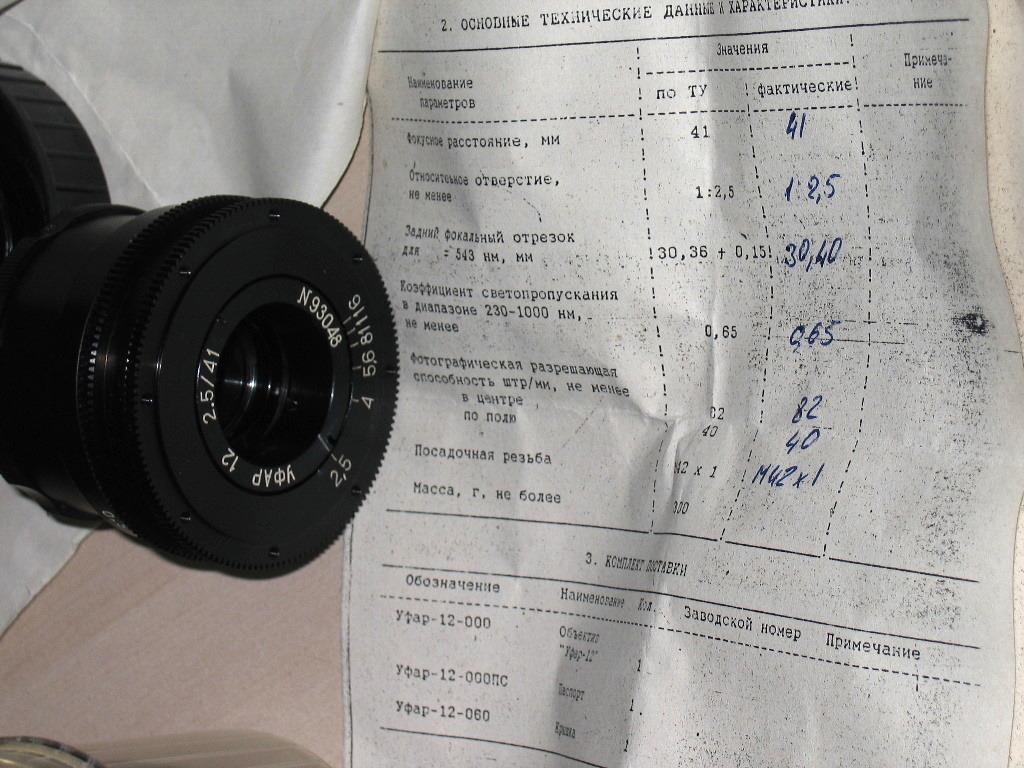
Yes, I know what OMG means Patrick
If these were engineering samples I doubt, as they have regular serial numbers,
I would guess they were backup lenses. How many have been lost in space is not known
to me, there were Mars flights 2,3,4,5 and such cameras were used in each. (I found
NASA documents proving this)
Lens data + pictures are here: http://www.macrolenses.de/ml_detail_sl.php?ObjektiveNr=323
_________________
Klaus - Admin
"S'il vient a point, me souviendra" [Thomas Bohier (1460-1523)]
http://www.macrolenses.de for macro and special lens info
http://www.pbase.com/kds315/uv_photos for UV Images and lens/filter info
https://www.flickr.com/photos/kds315/albums my albums using various lenses
http://photographyoftheinvisibleworld.blogspot.com/ my UV BLOG
http://www.travelmeetsfood.com/blog Food + Travel BLOG
https://galeriafotografia.com Architecture + Drone photography
Currently most FAV lens(es):
X80QF f3.2/80mm
Hypergon f11/26mm
ELCAN UV f5.6/52mm
Zeiss UV-Planar f4/60mm
Zeiss UV-Planar f2/62mm
Lomo Уфар-12 f2.5/41mm
Lomo Зуфар-2 f4.0/350mm
Lomo ZIKAR-1A f1.2/100mm
Nikon UV Nikkor f4.5/105mm
Zeiss UV-Sonnar f4.3/105mm
CERCO UV-VIS-NIR f1.8/45mm
CERCO UV-VIS-NIR f4.1/94mm
CERCO UV-VIS-NIR f2.8/100mm
Steinheil Quarzobjektiv f1.8/50mm
Pentax Quartz Takumar f3.5/85mm
Carl Zeiss Jena UV-Objektiv f4/60mm
NYE OPTICAL Lyman-Alpha II f1.1/90mm
NYE OPTICAL Lyman-Alpha I f2.8/200mm
COASTAL OPTICS f4/60mm UV-VIS-IR Apo
COASTAL OPTICS f4.5/105mm UV-Micro-Apo
Pentax Ultra-Achromatic Takumar f4.5/85mm
Pentax Ultra-Achromatic Takumar f5.6/300mm
Rodenstock UV-Rodagon f5.6/60mm + 105mm + 150mm
|
|
| Nach oben |
|
|
vulko
|
Verfasst am: Mo Sep 13, 2010 7:56 am Titel: |
|
Verfasst am: Mo Sep 13, 2010 7:56 am Titel: |
|
|
vulko wrote:
The piece of paper sais it has >65% of light to go through... This means no coating at all. |
|
| Nach oben |
|
|
kds315*
Anmeldungsdatum: 12.03.2008
Beiträge: 16911
Wohnort: Kehl, Germany
Expire: 2021-03-09
|
Verfasst am: Mo Sep 13, 2010 8:07 am Titel: |
|
Verfasst am: Mo Sep 13, 2010 8:07 am Titel: |
|
|
kds315* wrote:
That reasoning I don't understand; transmission is determined by the transmission of the substance first (glass, quartz, fluoride etc.) PLUS the air-substance reflectivity losses. Since I don't know how it is built internally, the surgace + internal losses cannot be exactly determined. But I would guess from how it looks that is is uncoated indeed.
_________________
Klaus - Admin
"S'il vient a point, me souviendra" [Thomas Bohier (1460-1523)]
http://www.macrolenses.de for macro and special lens info
http://www.pbase.com/kds315/uv_photos for UV Images and lens/filter info
https://www.flickr.com/photos/kds315/albums my albums using various lenses
http://photographyoftheinvisibleworld.blogspot.com/ my UV BLOG
http://www.travelmeetsfood.com/blog Food + Travel BLOG
https://galeriafotografia.com Architecture + Drone photography
Currently most FAV lens(es):
X80QF f3.2/80mm
Hypergon f11/26mm
ELCAN UV f5.6/52mm
Zeiss UV-Planar f4/60mm
Zeiss UV-Planar f2/62mm
Lomo Уфар-12 f2.5/41mm
Lomo Зуфар-2 f4.0/350mm
Lomo ZIKAR-1A f1.2/100mm
Nikon UV Nikkor f4.5/105mm
Zeiss UV-Sonnar f4.3/105mm
CERCO UV-VIS-NIR f1.8/45mm
CERCO UV-VIS-NIR f4.1/94mm
CERCO UV-VIS-NIR f2.8/100mm
Steinheil Quarzobjektiv f1.8/50mm
Pentax Quartz Takumar f3.5/85mm
Carl Zeiss Jena UV-Objektiv f4/60mm
NYE OPTICAL Lyman-Alpha II f1.1/90mm
NYE OPTICAL Lyman-Alpha I f2.8/200mm
COASTAL OPTICS f4/60mm UV-VIS-IR Apo
COASTAL OPTICS f4.5/105mm UV-Micro-Apo
Pentax Ultra-Achromatic Takumar f4.5/85mm
Pentax Ultra-Achromatic Takumar f5.6/300mm
Rodenstock UV-Rodagon f5.6/60mm + 105mm + 150mm
|
|
| Nach oben |
|
|
Orio

Anmeldungsdatum: 24.02.2007
Beiträge: 29545
Wohnort: West Emilia
Expire: 2012-12-04
|
Verfasst am: Mo Sep 13, 2010 8:19 am Titel: |
|
Verfasst am: Mo Sep 13, 2010 8:19 am Titel: |
|
|
Orio wrote:
Very sharp images, Klaus.
What I don't understand is, how could this lens get back from Mars? As far as I can recall, no space probe ever came back to earth from Mars. But I could be wrong of course.
_________________
Orio, Administrator
T*
NE CEDE MALIS AUDENTIOR ITO
Ferrania film is reborn! http://www.filmferrania.it/
Support the Ornano film chemicals company and help them survive!
http://forum.mflenses.com/ornano-chemical-products-t55525.html |
|
| Nach oben |
|
|
kds315*
Anmeldungsdatum: 12.03.2008
Beiträge: 16911
Wohnort: Kehl, Germany
Expire: 2021-03-09
|
Verfasst am: Mo Sep 13, 2010 9:29 am Titel: |
|
Verfasst am: Mo Sep 13, 2010 9:29 am Titel: |
|
|
kds315* wrote:
It was a backup lens Orio, never everything came back from Mars yet!
_________________
Klaus - Admin
"S'il vient a point, me souviendra" [Thomas Bohier (1460-1523)]
http://www.macrolenses.de for macro and special lens info
http://www.pbase.com/kds315/uv_photos for UV Images and lens/filter info
https://www.flickr.com/photos/kds315/albums my albums using various lenses
http://photographyoftheinvisibleworld.blogspot.com/ my UV BLOG
http://www.travelmeetsfood.com/blog Food + Travel BLOG
https://galeriafotografia.com Architecture + Drone photography
Currently most FAV lens(es):
X80QF f3.2/80mm
Hypergon f11/26mm
ELCAN UV f5.6/52mm
Zeiss UV-Planar f4/60mm
Zeiss UV-Planar f2/62mm
Lomo Уфар-12 f2.5/41mm
Lomo Зуфар-2 f4.0/350mm
Lomo ZIKAR-1A f1.2/100mm
Nikon UV Nikkor f4.5/105mm
Zeiss UV-Sonnar f4.3/105mm
CERCO UV-VIS-NIR f1.8/45mm
CERCO UV-VIS-NIR f4.1/94mm
CERCO UV-VIS-NIR f2.8/100mm
Steinheil Quarzobjektiv f1.8/50mm
Pentax Quartz Takumar f3.5/85mm
Carl Zeiss Jena UV-Objektiv f4/60mm
NYE OPTICAL Lyman-Alpha II f1.1/90mm
NYE OPTICAL Lyman-Alpha I f2.8/200mm
COASTAL OPTICS f4/60mm UV-VIS-IR Apo
COASTAL OPTICS f4.5/105mm UV-Micro-Apo
Pentax Ultra-Achromatic Takumar f4.5/85mm
Pentax Ultra-Achromatic Takumar f5.6/300mm
Rodenstock UV-Rodagon f5.6/60mm + 105mm + 150mm
|
|
| Nach oben |
|
|
no-X

Anmeldungsdatum: 19.07.2008
Beiträge: 2495
Wohnort: Budejky, Czech Republic
|
Verfasst am: Mo Sep 13, 2010 7:50 pm Titel: |
|
Verfasst am: Mo Sep 13, 2010 7:50 pm Titel: |
|
|
no-X wrote:
Well, I tried to find some info... not much, but at least something...
Уфар - or Ufar - was a family of lenses, which had optical scheme (at least majority of them):
1-1-1 | 3-1
this is Уфар-2 (52/2.8 )

a bit similar to old (non-thorium) version of Super Takumar 50/1.4:

Anyway, Уфар-2 had quite high resolution - peak at 70 lines and like other "Ufars" it was designed for UV photography. While "Ufar" family were medium speed lenses for UV photography, there was also "Uf" (Уф) family of lenses, which were also designed for UV photography, but they were slower. Their optical scheme was 1 | 3-1.
I'd like to see bokeh of this special optical design
_________________
(almost) complete list of Helios lenses |
|
| Nach oben |
|
|
|
|
 Deutsch
 Español
 中文
 Magyar
 Русский
 日本語
 Français


